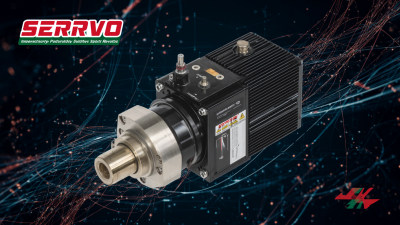
How to Choose the Right Spindle Motors for Your Machinery Needs
Choosing the right spindle motors is crucial for any machinery operation. Spindle motors influence performance, precision, and overall machine efficiency. A well-chosen spindle motor enhances productivity and minimizes downtime.
When selecting spindle motors, consider specific requirements such as power output, speed, and torque. Different applications necessitate various motor specifications. Falling short in these details can lead to operational issues. Users must evaluate their machinery needs carefully. It may require time to assess all options available.
Moreover, each spindle motor has its pros and cons. These factors can impact your operations significantly. Expertise in this area provides assurance in making the right choice. Thus, consulting with professionals can prove invaluable. Ultimately, reliable advice leads to better decision-making.
Factors Influencing Spindle Motor Selection for Machinery Applications
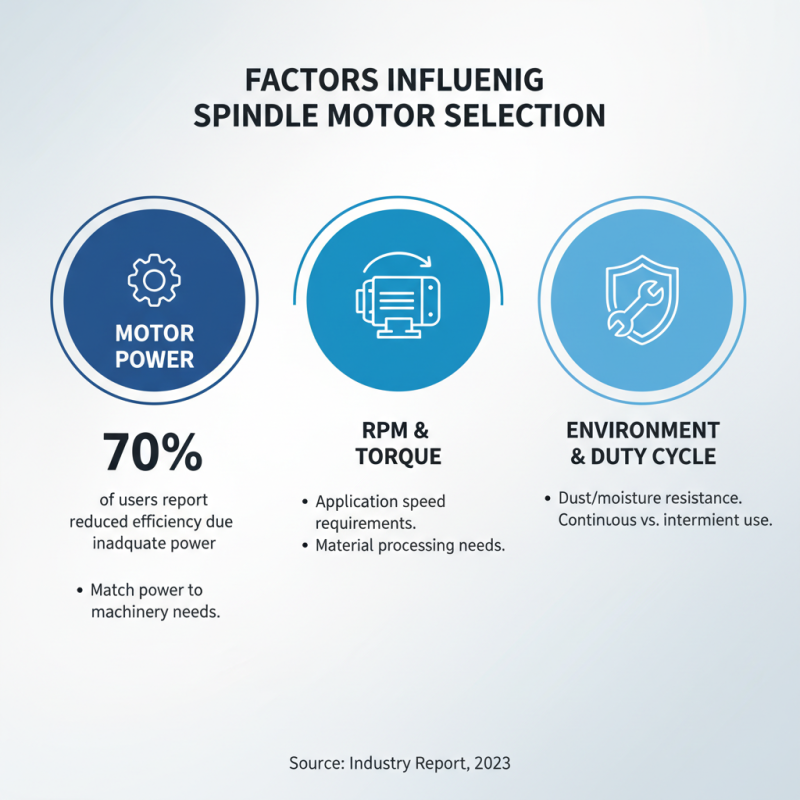
When selecting spindle motors for machinery applications, various factors come into play. One significant aspect is motor power. According to a recent industry report, 70% of users find that inadequate power results in reduced efficiency. Understanding your machinery's power requirements is essential.
Speed capabilities also matter. High-speed spindle motors can enhance productivity. However, they might increase wear and tear on components. It's crucial to analyze the balance between speed and durability. Motor cooling systems are another concern. Poor cooling can lead to overheating, significantly shortening motor life.
Tips: Always consult your machinery's specifications before making a choice. Evaluate different cooling systems for optimal performance.
Torque specifications should not be overlooked. High torque leads to better performance but may require robust machinery. Experts recommend factoring in torque ratings when comparing motors. This ensures your equipment performs under various loads.
Finally, matching the power supply type to the spindle motor is vital. A mismatch can cause operational issues. Regular maintenance checks can help maintain peak performance over time.
Understanding Different Types of Spindle Motors and Their Uses
When selecting a spindle motor, understanding its different types is crucial.
The main categories include AC, DC, and servo motors.
AC spindle motors are common in industrial settings due to their durability and efficiency.
They operate smoothly and require less maintenance. However, they may be less responsive in certain applications.
DC spindle motors offer great torque at low speeds, making them ideal for specific machining tasks.
They are simpler to control but can wear out faster compared to AC motors.
For high precision and speed control, servo motors are an excellent choice.
They deliver exceptional accuracy and allow for real-time adjustments, though they tend to be more expensive.
Each type of spindle motor brings advantages and limitations. Assessing your needs is essential.
Consider the materials you work with, the precision required, and your budget.
In some cases, a simpler motor may not meet future demands, leading to costly replacements.
Careful thought will help you avoid common pitfalls in choosing the right spindle motor.
Evaluating Specifications: Power, RPM, and Torque Requirements
Choosing the right spindle motors is crucial for optimal machine performance. Evaluating specifications like power, RPM, and torque is essential. Power requirements often determine the efficiency of the spindle motor in various applications. According to industry reports, a motor with at least 5 HP is common for CNC machining. However, specific tasks may require higher power levels.
RPM, or revolutions per minute, directly influences the speed of cutting or drilling operations. For instance, high-speed applications may need motors capable of 20,000 RPM or more. Conversely, heavier applications benefit from lower RPM to ensure precision and control. Torque, measured in Nm (Newton meters), indicates the motor's ability to maintain performance under load. The industry standard suggests that a torque rating of 20-30 Nm is effective for many milling processes.
Machine layout and operational conditions can complicate these choices. Not all motors provide consistent performance across different environments. Temperature fluctuations and vibration can adversely affect motor efficiency. Industry insights emphasize that adequate cooling and maintenance are vital. Balancing these specifications is challenging but crucial for achieving optimal results. Continuous assessment of performance metrics will yield better decisions in selecting spindle motors.
How to Choose the Right Spindle Motors for Your Machinery Needs - Evaluating Specifications: Power, RPM, and Torque Requirements
| Motor Type |
Power (kW) |
RPM |
Torque (Nm) |
Application |
| AC Spindle Motor |
5.5 |
24000 |
3.5 |
CNC Machining |
| DC Spindle Motor |
3.0 |
18000 |
2.0 |
Woodworking |
| Brushless Spindle Motor |
7.5 |
30000 |
4.0 |
Metal Cutting |
| High-Frequency Spindle Motor |
10.0 |
40000 |
5.5 |
Precision Engineering |
The Impact of Cooling Systems on Spindle Motor Performance
The cooling system is crucial for spindle motor performance. Effective cooling can enhance efficiency and prolong motor life. According to the International Journal of Advanced Manufacturing Technology, temperatures above 80°C can reduce motor life by up to 50%. Maintaining optimal temperatures is vital.
Choosing the right cooling system involves understanding the application environment. For instance, high-speed machining generates more heat than standard operations. This means that adequate cooling is essential for achieving better accuracy and tool life. Fans, liquid cooling, and heat exchangers are common methods. Each has its benefits and limitations.
Tips for selecting a cooling solution include evaluating expected heat loads and potential temperature rises. It's also wise to consider maintenance needs. Regular inspections ensure the cooling system operates effectively. An improperly maintained system can lead to failures, resulting in costly downtime.
Impact of Cooling Systems on Spindle Motor Performance
Cost-Benefit Analysis: Choosing Between Standard and Custom Motors
When selecting spindle motors, a cost-benefit analysis is crucial. Standard motors often have lower upfront costs. According to industry reports, they can be 20-30% cheaper than custom options. For many applications, these motors provide adequate performance. However, they may lack certain features crucial for specific tasks. For instance, precision machining might require custom specifications that standard motors do not offer.
Custom motors can significantly enhance performance in specialized applications. Reports indicate that investing in a custom motor may lead to efficiency gains of up to 15%. These gains can offset higher initial costs. However, the decision to opt for a custom motor should not be taken lightly. The added expense must be justified by the anticipated improvement in productivity. Analyzing long-term benefits versus short-term costs allows for a better understanding of potential ROI.
Ultimately, businesses must weigh their unique requirements against budget constraints. Generic solutions might suffice for standard operations. Yet, specific high-performance needs often demand a more tailored approach. Companies must reflect on their operational goals and evaluate whether the investment in a custom motor aligns with these objectives.


 Baijia Hao