2026 How to Choose the Right Linear Motor Actuator for Your Project?
In today's industrial landscape, selecting the right Linear Motor Actuator is crucial for project success. According to a recent market analysis, the demand for linear motor actuators is projected to grow at a compound annual growth rate (CAGR) of 6.1% from 2021 to 2026. This growth stems from their increasing application in automation, robotics, and precision machinery.
Choosing the correct actuator involves understanding your project's specific requirements. Factors such as load capacity, speed, and control precision play essential roles. Industry experts emphasize the significance of these parameters. They argue that improper selection can lead to inefficiencies and increased costs. While performance data is abundant, it often lacks contextual relevance, leading to potential misjudgments.
Moreover, the variety of actuator designs can overwhelm decision-makers. Users must also consider the operational environment. Factors like temperature and humidity can impact actuator performance. Without thorough research, one might choose an actuator that fails under specific conditions, resulting in operational setbacks. Thus, evaluating the full spectrum of available data is essential for making an informed choice.

Understanding Linear Motor Actuators and Their Applications
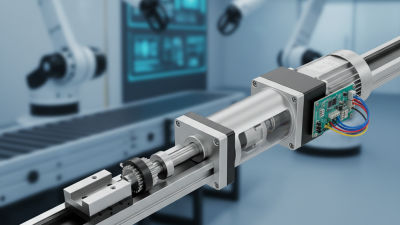
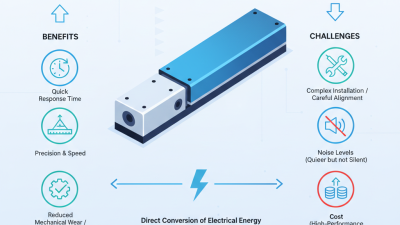
Linear motor actuators are revolutionizing various industries. They provide precise, efficient, and smooth motion control. These devices convert electrical energy directly into linear motion, eliminating the need for gears or belts. This direct conversion enhances reliability and reduces maintenance requirements.
Applications vary greatly. In robotics, linear actuators enable precise movements for tasks such as pick-and-place operations. They are also widely used in manufacturing, improving production line efficiency. However, not all actuators are created equal. Selecting the right one involves considering factors like load capacity, speed, and stroke length.
Sometimes users overlook how environmental conditions affect performance. For instance, high temperatures or dust exposure can impact actuator functionality. It’s crucial to evaluate how these elements interact with your project requirements. Often, the best choice involves balancing efficiency with the project's specific needs. Understanding these details can lead to enhanced performance and reliability in your applications.
Key Factors to Consider When Selecting a Linear Motor Actuator
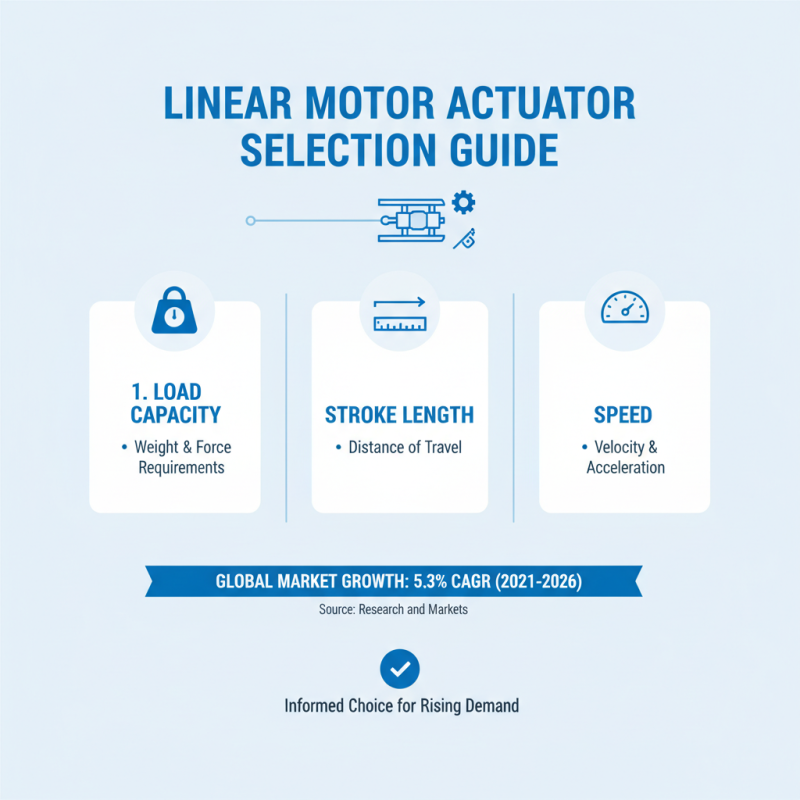
When selecting a linear motor actuator, several key factors must be considered. The application requirements often dictate the specifications needed. Consider the load capacity, stroke length, and speed. According to an industry report by Research and Markets, the global linear actuator market is projected to grow at a CAGR of 5.3% from 2021 to 2026, indicating rising demand. This trend emphasizes the importance of making informed choices.
Tip: Assess the environmental conditions your actuator will face. Factors such as temperature, humidity, and dust can significantly impact performance. For instance, a linear actuator exposed to high temperatures may require additional cooling mechanisms. This is often overlooked in initial planning stages.
Precision is another essential component. Many applications, including robotics and automation, require high accuracy. A 2020 study from the International Journal of Advanced Manufacturing Technology highlights that a motion error of just 0.1 mm can lead to substantial operational losses. Reflect on the tolerances your project demands.
Tip: Always prototype with multiple actuator types. This hands-on approach allows for real-world testing and can unveil unexpected challenges in performance. It’s crucial to acknowledge that perfect conditions rarely exist. Being prepared for adjustments can keep your project on track.
Types of Linear Motor Actuators and Their Characteristics
When selecting a linear motor actuator, understanding the types and their characteristics is essential. There are several types of linear motor actuators available, each tailored for specific applications. For instance, electromagnetic linear actuators offer precise control and high efficiency. They are ideal for robotics and automation tasks. Magnetic linear actuators, on the other hand, provide smooth motion and low wear. They excel in applications where minimal friction is crucial.
Another option is the piezoelectric actuator. This type is known for its rapid response time and fine positioning capability. It's often used in medical devices and optical systems. However, these actuators can be sensitive and may not suit every environment. It's important to consider these characteristics carefully before making a decision.
Additionally, there are stepper motors that allow for incremental movement. This can lead to greater flexibility in design. Unfortunately, they can also suffer from resonance issues. These challenges require attention during integration. Evaluating these various types ensures the best fit for your project’s needs, balancing performance with reliability.
Determining the Required Specifications for Your Project
When selecting a linear motor actuator, understanding your project's specifications is crucial. Start by defining the stroke length you need. This is the distance the actuator must move to perform its task effectively. For example, if you require precise positioning in a robotic arm, a longer stroke may be necessary.
Next, consider the load capacity. Assess the weight of the components the actuator will move. Too much weight can lead to failure. It’s important to choose an actuator that meets or exceeds your load requirements. Also, keep in mind the speed of operation. Determine how fast you need the actuator to move. High-speed applications require specialized motors.
**Tips:**
Focus on the torque ratings as they directly impact performance.
Evaluate the environment where the actuator will function. Harsh conditions require robust solutions.
Finally, don’t overlook power supply needs. Ensure that your actuator's voltage and current requirements align with your system. A mismatch can cause inefficiencies or damage. Reflect on these factors carefully to prevent costly mistakes. Design specifications need careful thought to ensure optimal functionality.
2026 How to Choose the Right Linear Motor Actuator for Your Project? - Determining the Required Specifications for Your Project
| Specification |
Required Value |
Unit |
Notes |
| Force Output |
500 |
N |
Consider peak vs. continuous force |
| Stroke Length |
300 |
mm |
Matching the application needs |
| Speed |
100 |
mm/s |
Dynamic performance requirements |
| Power Supply Voltage |
24 |
VDC |
Ensure compatibility with system |
| Control Type |
Closed-loop |
|
Preferred for precision applications |
| Environment Rating |
IP65 |
|
Protection against dust and water |
Evaluating Cost and Maintenance for Linear Motor Actuators
When choosing a linear motor actuator, evaluating cost and maintenance is crucial. Linear motor actuators can vary significantly in price based on their specifications. Understanding your budget is essential. Sometimes, a cheaper option may lead to higher maintenance costs. Investing in a quality actuator can reduce long-term expenses.
Maintenance requirements also play a key role in your decision. Some actuators need regular inspections and part replacements. Others might require minimal upkeep. Assess your team's expertise. Are they experienced in servicing linear motors? If not, a more reliable actuator could save you from future headaches.
Consider the operational environment too. Dust and moisture can affect performance. Some models are designed for harsher conditions, while others are not. It's important to factor in these details. A well-suited actuator can enhance efficiency and reduce downtime. Always reflect on these aspects to ensure you make the right choice for your project.


 Baijia Hao