2026 How to Choose Industrial Servo Motors for Your Automation Needs?
In today's competitive market, choosing the right Industrial Servo Motors is crucial for automation success. According to a recent report by MarketsandMarkets, the global servo motors market is projected to reach $8.8 billion by 2027. This growth stems from the increasing demand for efficient automation solutions across various industries.
Industrial Servo Motors play a pivotal role in enhancing accuracy and performance in automated systems. Their precision motion control capabilities are essential in applications such as robotics and conveyor systems. However, selecting the proper motor can be challenging. Factors such as torque requirements, speed, and environment must be considered.
With advancements in technology, the variety of Industrial Servo Motors available is overwhelming. Users need to navigate through different specifications and features. A poorly chosen servo motor can lead to inefficiencies and increased costs. Therefore, understanding both the technical aspects and operational needs is vital for making informed decisions in automation projects.
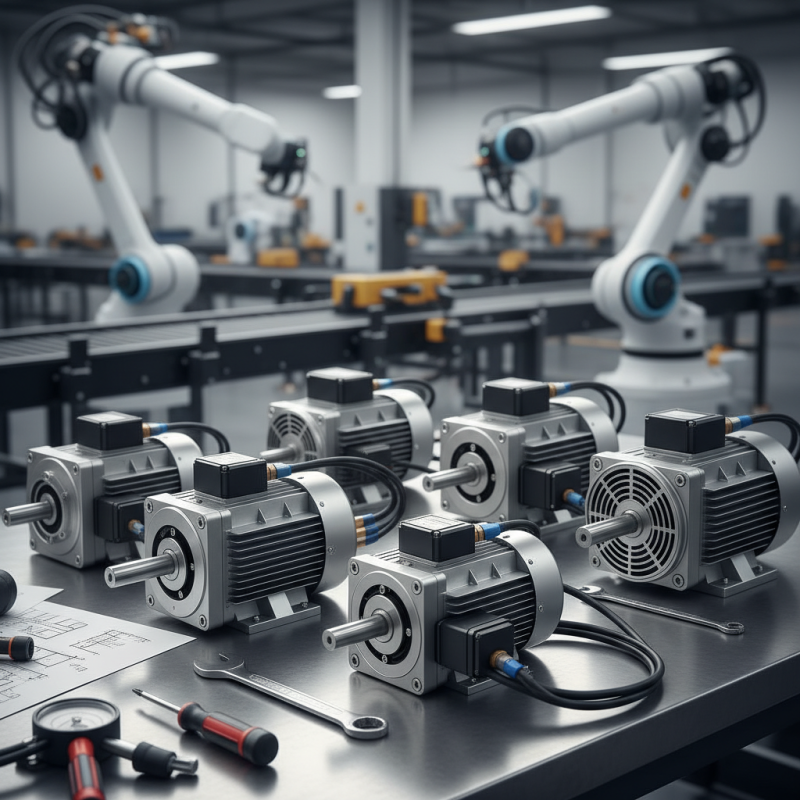
Understanding the Basics of Industrial Servo Motors
When selecting industrial servo motors for automation, it is vital to understand their basic functions and specifications. Servo motors deliver precise control of angular and linear position. This capability plays a crucial role in applications like robotics and CNC machinery. According to the International Society of Automation, over 70% of industrial processes benefit from using servo motors due to their efficiency and accuracy.
A variety of factors influence the choice of servo motors. Features such as torque, speed, and feedback mechanisms should align with your automation needs. Torque is essential for overcoming resistance during operation. In applications requiring quick acceleration, high-speed motors are preferable. Feedback mechanisms, whether incremental or absolute, also determine the system's overall performance. A report by the Global Industry Analysts projects a significant growth of the servo motor market, driven by advancements in automation technologies.
Selecting the right servo motor can be challenging. Common mistakes include overestimating torque requirements or ignoring thermal limits. Some users focus solely on the motor’s specifications without considering the overall system. This oversight can lead to inefficiencies. It’s crucial to analyze and test various options before finalizing your choice. Seek guidance from expert resources for better decision-making.
Factors to Consider in Selecting Servo Motors for Automation
Selecting the right servo motor for automation is critical. Several factors influence this choice. One key aspect is load requirements. Determine the torque needed for your application. According to reports, inadequate torque can lead to motor overheating and failure. A motor must handle peak loads easily.
Another factor is speed. The motor's speed range should align with your system's operational demands. If your application involves rapid movement, a motor with a high-speed capability is essential. Research indicates that speed mismatches can reduce efficiency by up to 30%.
Precision matters, too. Look for motors that provide the accuracy required for your tasks. In some cases, choosing a high-precision motor can lead to better overall system performance. Please keep in mind that the selection process may require iterations. Sometimes, initial choices do not yield the expected results, compelling engineers to reassess their needs.
Evaluating Performance Specifications for Your Application
Choosing the right industrial servo motors is crucial for optimizing automation. When evaluating performance specifications, specific metrics should be prioritized. Torque, speed, and accuracy are essential. According to a report by the International Federation of Robotics, precise torque control can enhance efficiency by up to 30%. Understanding your application's demands will help narrow down options.
On the other hand, speed ratings must align with the operational requirements. A motor that operates too slowly can hinder production. However, over-investing in excessively fast motors can lead to unnecessary costs. Research indicates that selecting a motor with an appropriate speed range is key to operational success.
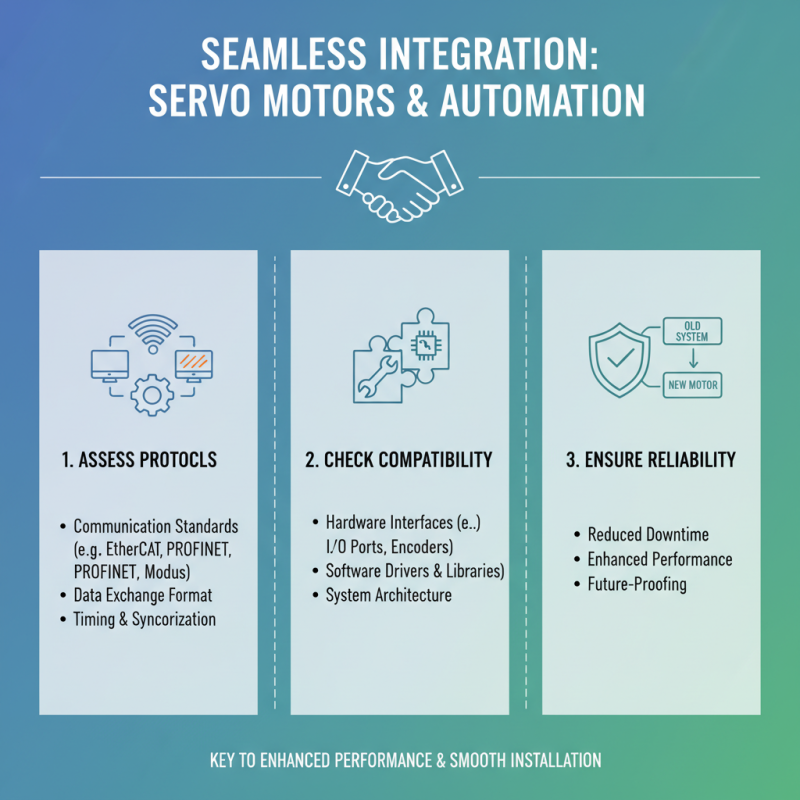
Moreover, think about heat dissipation. Motors that run hot may reduce lifespan and reliability. Another vital aspect is compatibility with existing systems. Integrating a new motor with legacy equipment might introduce unforeseen challenges. Ensuring seamless communication between components is essential.
A survey found that approximately 25% of automation failures stem from compatibility issues. Sometimes, revisiting the basics of your automation setup can reveal opportunities for improvement.
Comparing Servo Motor Types and Their Advantages
Choosing the right industrial servo motor for automation needs involves understanding various types. Each type offers distinct advantages.
DC servo motors are simple and cost-effective. They are good for applications requiring moderate speed and torque.
AC servo motors, on the other hand, excel in applications needing high precision and reliability. Their efficiency in energy usage is notable.
Stepper motors are also worth considering. They provide excellent control over movement. However, they may struggle with high-speed applications.
It’s important to match the motor type with specific task requirements. Evaluate how each motor responds under loads and different environments.
Testing in real-world scenarios often reveals differences that specs might not cover.
Another aspect is compatibility with existing systems. Some motors integrate easily, while others require additional components.
Assessing these details helps avoid future complications. Reflect on the specific needs of your automation tasks.
Understanding these nuances is essential while exploring servo motor types. It shapes not only efficiency but also overall system reliability.


 Baijia Hao