How to Select the Right Servo Drives for Your Automation Needs?
Selecting the right servo drives is crucial for the success of your automation projects. Servo drives control the movement and precision of machines. They play a vital role in achieving desired performance and efficiency. Understanding your specific requirements is essential.
Different applications demand different features. Some machines require high torque, while others focus on speed. Knowing these needs can help you avoid costly mistakes. Compatibility with existing systems is another factor to consider. Mismatched components can lead to inefficiencies or failures.
Don’t overlook the importance of reliable suppliers. Look for manufacturers with proven track records. Their expertise can guide you through the selection process. However, it's also important to question their claims. Relying solely on sales pitches may lead to regret. Always seek validated performance metrics and customer reviews. By thoroughly evaluating options, you can ensure your choice of servo drives aligns with your automation goals.

Understanding the Basics of Servo Drives in Automation
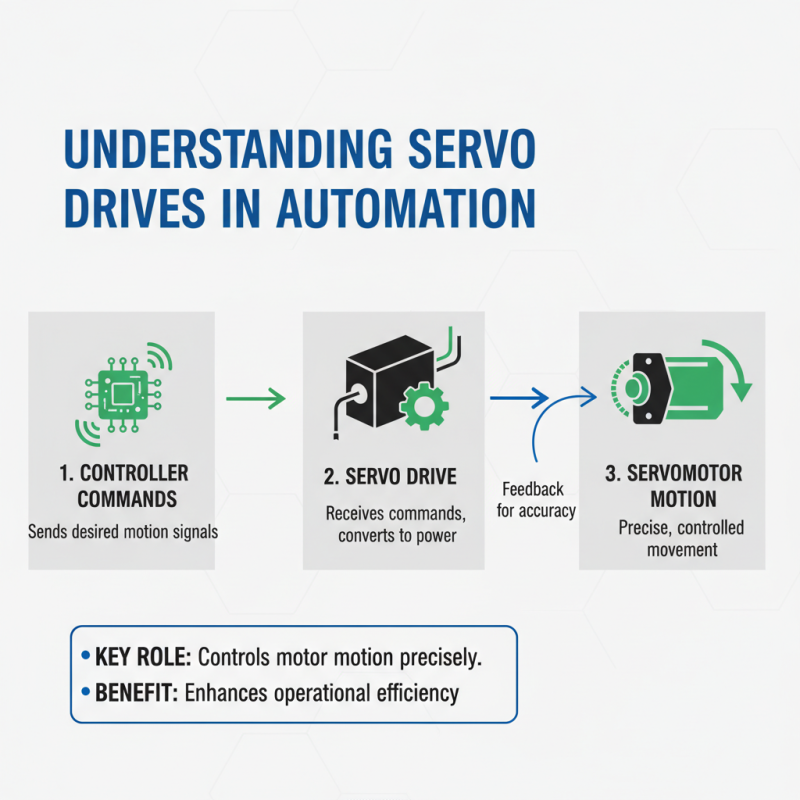
When exploring servo drives in automation, understanding their fundamentals is essential. Servo drives are key components that control the motion of servomotors. They convert commands from a controller into precise motor movements. It’s vital to grasp how these drives work to enhance operational efficiency.
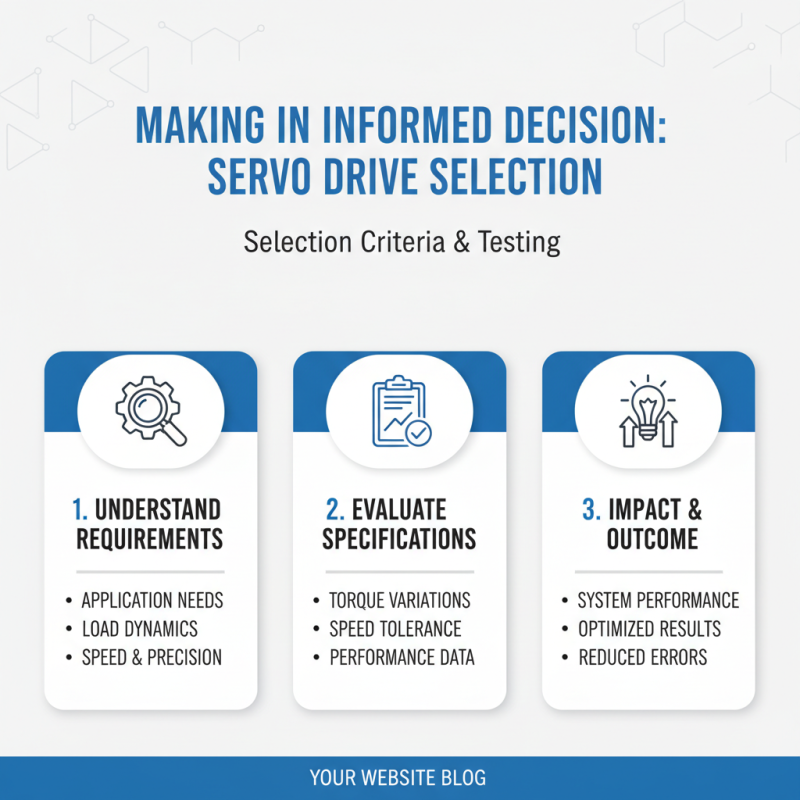
One crucial tip is to assess your application needs. Different applications require varying response rates and torque levels. A mismatch in drive selection can lead to inefficiencies. Consider the performance specifications and ensure they match your system parameters.
Another aspect to reflect on is the integration process. Compatibility with existing systems is vital for smooth operations. Sometimes, you may face challenges during integration. This could result in unanticipated downtime. Evaluate your technical support options and ensure your team is prepared for troubleshooting.
Lastly, always stay updated on industry trends. The automation landscape is constantly evolving. New technologies can offer improved performance and efficiency. Regularly review your servo drive systems to keep them relevant and effective. Embracing change can lead to significant advancements in automation processes.
Identifying Your Automation Requirements and Objectives
When selecting servo drives for automation, it is essential to clarify your requirements. Start by defining the specific tasks your system will perform. Consider factors like speed, torque, and precision. Each application has unique demands, and understanding these allows for better decision-making. Consider the environment where the drives will operate. Harsh conditions can affect performance and longevity.
Evaluate your objectives as well. Are you prioritizing speed or accuracy? Do you need to optimize for energy efficiency? Aligning your servo drives with your production goals is crucial. For example, high-speed applications may require more advanced technology. This could lead to higher initial costs but result in improved productivity.
Balancing performance with budget constraints is often challenging.
Reflect on your long-term needs as well. Initial choices might serve immediate tasks, but the system should be adaptable for future upgrades. Technology evolves quickly, and a flexible system will save you from frequent replacements. Analyzing both present and future requirements ensures a more robust investment in automation.
Evaluating Key Technical Specifications of Servo Drives
When selecting servo drives for automation, understanding key technical specifications is crucial.
Torque output, feedback method, and control type significantly influence performance. Torque affects how effectively a drive responds to load changes.
The most common feedback mechanisms are encoders and resolvers, each offering unique reliability and precision benefits.
According to a recent industry report, systems utilizing high-precision encoders can improve overall efficiency by up to 20%.
Performance metrics such as response time and bandwidth must also be considered.
Drives that offer faster response times can reduce cycle times and enhance productivity. In a competitive environment, overlooking these specs can result in missed opportunities.
It’s essential to assess the overall architecture of your automation system before making a decision.
Tip: Always evaluate your current and future system requirements.
Conduct a thorough analysis of your application needs. This will help ensure that the selected servo drives can scale as your operations grow.
Regularly reviewing performance data from existing systems may also illuminate areas for improvement. Encourage your team to share insights on ongoing challenges.
This collaborative approach often reveals hidden inefficiencies.
Comparing Different Servo Drive Technologies and Features
When selecting servo drives, it's essential to compare various technologies and features. Common servo drive types include analog, digital, and brushless systems. Each type has distinct advantages and limitations. Analog drives are simple and cost-effective but may lack precision. Digital drives offer enhanced accuracy and flexibility, making them suitable for complex applications. However, they can be more expensive and require advanced programming.
Consider the specific features you need. Feedback options, like encoders, greatly influence performance. High-resolution encoders provide more precise position control. Pay attention to communication protocols as well. Some drives support standard protocols, while others use proprietary systems, affecting compatibility. This can limit integration into existing systems.
Power ratings and thermal management are also critical. An undersized drive can lead to overheating and failure. Review input voltage requirements thoroughly. High-performance applications may demand robust, high-power solutions. Conversely, simple tasks might be satisfied with lower-capacity drives. Each decision should reflect the demands of your application, balancing cost and capability effectively.


 Baijia Hao