What is a Servo Linear Actuator and How Does it Work?
Servo Linear Actuators are pivotal components in modern automation systems. With the global market for linear actuators projected to reach $14 billion by 2026, their significance cannot be overstated. These devices convert rotary motion to linear motion, delivering precision and efficiency. Their applications span various industries, from robotics to aerospace.
Industry reports indicate that the demand for Servo Linear Actuators is driven by advancements in industrial automation and smart technology. Manufacturers are increasingly opting for these actuators to enhance system reliability and reduce maintenance costs. However, many organizations overlook the importance of selecting the right actuator for their specific needs.
Understanding the mechanics of Servo Linear Actuators is essential. While they offer numerous benefits, improper integration can lead to inefficiencies. Emphasizing the importance of correct specifications is vital for optimal performance.
What is a Servo Linear Actuator?
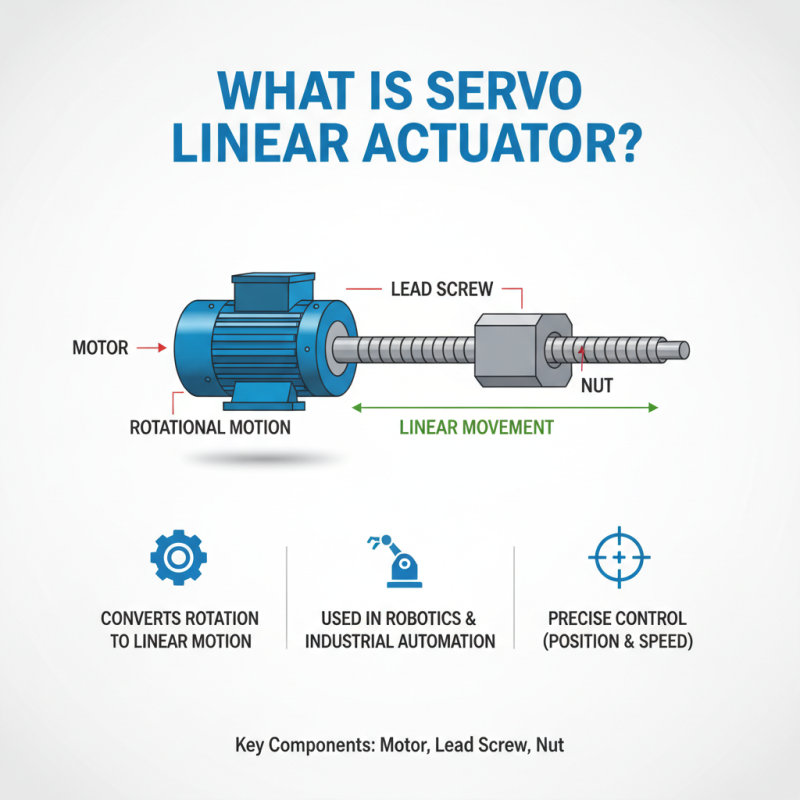
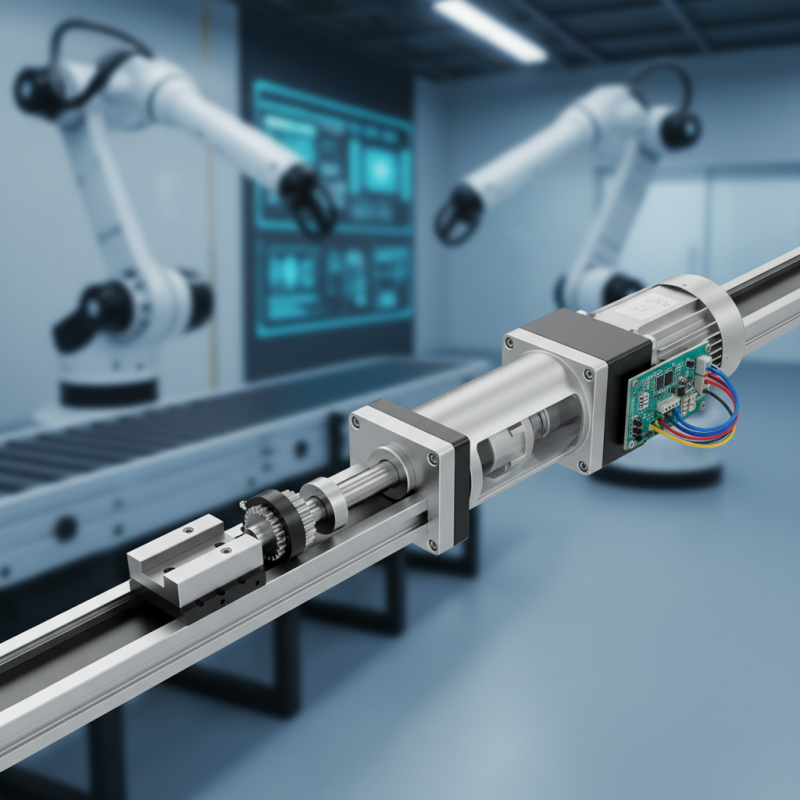
A servo linear actuator is an advanced device that converts rotational motion into linear movement. This technology is widely used in various applications, including robotics and industrial automation. The actuator consists of a motor, a lead screw, and a nut. The motor rotates the screw, driving the nut along its length. This mechanism allows precise control of position and speed.
When considering a servo linear actuator, it's essential to focus on accuracy and load capacity. The actuator's design impacts precision. Ensure it meets your specific needs for dimensions and force.
Tips for effective use: Always monitor the system for any unusual sounds. This can indicate wear or misalignment. Regular maintenance helps in prolonging the actuator's lifespan. Also, consider the environment where the actuator will operate. Dust and moisture can affect performance.
When selecting a servo linear actuator, reflect on your application requirements. Not every actuator is suited for all tasks. The wrong choice can result in inefficiency. Understand the specifics of your operation to make better decisions.
Components of a Servo Linear Actuator
A servo linear actuator is essential for precise motion control in various applications. Understanding its components helps in leveraging its full potential. Key elements include the motor, feedback sensor, and controller. The motor generates the necessary force, while the feedback sensor monitors the position. This data allows the controller to adjust the motor’s operation in real-time.
Interestingly, the servo motor often operates with a closed-loop system, providing accuracy up to 0.1 mm. According to industry reports, around 30% of manufacturing processes benefit from enhanced precision through these actuators. When combining these components, engineers can achieve faster response times and better overall system performance.
**Tips:** When selecting a servo linear actuator, consider load requirements and speed. A mismatch can lead to inefficiencies. Regularly monitor system feedback to identify potential issues. This proactive approach can prevent costly downtime.
How Does a Servo Linear Actuator Operate?
A servo linear actuator is a type of device that converts rotary motion into linear motion. It uses a motor, typically a servo motor, to drive a lead screw or ball screw. This mechanism enables precise control over positioning and speed. The linear actuator is often used in automation, robotics, and manufacturing processes. Its high accuracy is a significant advantage in various applications.
The operation of a servo linear actuator starts with the servo motor receiving an input signal. This signal indicates the desired position and speed. The motor then rotates, driving the lead screw or ball screw. This results in linear movement, pushing or pulling the attached load. Feedback systems, such as encoders, provide real-time position information. This creates a closed-loop system, allowing the actuator to adjust its position accurately.
While servo linear actuators are reliable, they can also present challenges. Calibration is vital for optimal performance. Misalignment or wear can affect precision. Additionally, the feedback system must be functioning correctly, or errors may occur. Understanding these potential pitfalls is essential for effective implementation.
Applications of Servo Linear Actuators in Industry
Servo linear actuators play a vital role in various industrial applications. These devices convert rotational motion into linear motion, allowing for precise control. Industries that rely on automation benefit greatly from their use. In manufacturing, they assist in tasks such as assembly and packaging. Their accuracy enhances production efficiency.
In robotics, servo linear actuators provide the necessary movement for robotic arms. They allow for intricate movements in tight spaces. Such flexibility is crucial in delicate tasks, like surgery or electronics assembly. The demand for precision in modern manufacturing makes these actuators indispensable.
However, integrating servo linear actuators is not without challenges. Misalignment during setup might affect performance. Regular maintenance is often required to ensure reliability. Furthermore, operators need training to maximize their potential. Understanding these aspects is critical for successful implementation in industrial settings.
What is a Servo Linear Actuator and How Does it Work? - Applications of Servo Linear Actuators in Industry
| Parameter |
Description |
Typical Applications |
Advantages |
| Type |
Electromechanical actuator |
Industrial automation, robotics |
High precision, fast response |
| Force Output |
Varies based on size and model |
Material handling, medical devices |
Customizable for specific needs |
| Control Method |
Closed-loop control |
CNC machinery, 3D printing |
Enhanced accuracy and repeatability |
| Speed |
High-speed operation available |
Food processing, packaging |
Increased productivity |
| Durability |
Robust construction |
Heavy-duty applications, testing equipment |
Long lifespan, reduced maintenance |
Advantages of Using Servo Linear Actuators Over Other Actuators
Servo linear actuators provide precision and control for various applications. They outperform traditional actuators in many ways. One major advantage is their ability to provide accurate positioning. This feature is crucial in robotics, manufacturing, and automation. Precise movements minimize errors and enhance overall efficiency.
The speed of servo linear actuators is another significant benefit. They can operate at higher speeds compared to standard pneumatic or hydraulic systems. This capability reduces processing time, leading to increased productivity. In addition, their compact design allows for installation in tight spaces.
Here are some tips to boost your implementation of servo linear actuators. Regular calibration ensures consistent performance. Keep an eye on wear and tear. For integration, ensure compatibility with existing systems. This proactive approach enhances the reliability of your setup. Ensure to consider your specific needs when choosing the actuator. Some applications may require high torque, while others need rapid response times.
Performance Comparison of Servo Linear Actuators vs. Traditional Actuators
This chart compares the performance metrics of Servo Linear Actuators against traditional actuators based on speed, precision, and efficiency.


 Baijia Hao