What is a Stepper Motor Controller and How Does it Work?
Stepper motor controllers are vital components in modern automation and robotics. They convert digital signals into precise movements, allowing stepper motors to function effectively. According to a report by MarketsandMarkets, the stepper motor controller market is projected to reach USD 2.3 billion by 2026, indicating robust growth in various industries, including manufacturing and medical devices.
Expert John Anderson, a leader in motion control solutions, emphasizes the importance of these controllers: "Step motor controllers ensure accuracy in movement, which is crucial for intricate tasks." Their ability to control position and speed makes them essential in practical applications like 3D printing and CNC machining.
However, the technology is not without challenges. Issues such as overheating and resonance can affect performance. Engineers must constantly innovate to overcome these hurdles. In the pursuit of perfection, misunderstandings in controller design can lead to inefficiencies. Exploring these intricacies reminds us that while stepper motor controllers enhance automation, there is always room for improvement.
What is a Stepper Motor Controller?
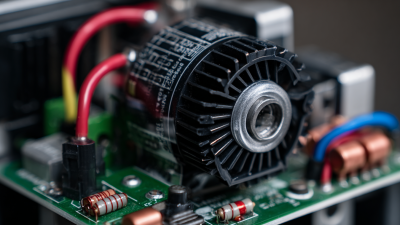
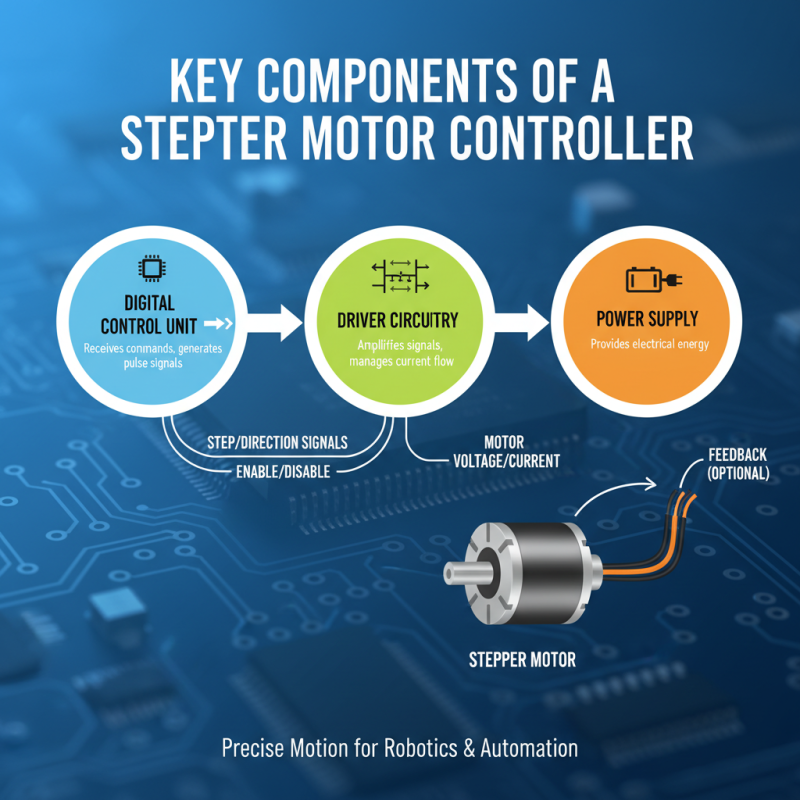
A stepper motor controller is a crucial device in precision motion control systems. It manages the operation of stepper motors, which move in discrete steps. Unlike regular motors, stepper motors provide precise positioning and repeatable movements. This makes them ideal for applications like 3D printers and CNC machines. The controller translates digital signals from a microcontroller into electrical pulses for the motor.
Stepper motor controllers use algorithms to determine the steps needed for control. They must carefully manage timing and direction. The process can be delicate, leading to issues if not calibrated correctly. For example, if the timing is off, the motor can skip steps or stall. Additionally, heat generation is a common challenge. Controllers may need a cooling mechanism in high-performance applications.
Implementing a stepper motor controller isn’t always straightforward. Developers often face unexpected challenges. Correct wiring and configurations are essential, but mistakes can lead to frustrating setbacks. Fine-tuning the stepper motor settings requires trial and error. This trial phase can be time-consuming but is critical for achieving the desired performance. Proper understanding of the controller and its limitations is key to successful integration.
Stepper Motor Controller Specifications
| Specification |
Description |
| Operating Voltage |
12V - 48V DC |
| Current Rating |
1A - 3A per phase |
| Microstepping Resolution |
Full step, Half step, 1/4 step, 1/8 step, 1/16 step |
| Control Interface |
PWM, Serial, I2C, SPI |
| Protection Features |
Overcurrent protection, Thermal shutdown |
| Dimensions |
50mm x 50mm x 30mm |
| Weight |
150g |
| Temperature Range |
-20°C to 85°C |
How Stepper Motor Controllers Function
Stepper motor controllers play a crucial role in precise motion control. They manage the power supply to stepper motors, determining their position and speed. A controller interprets the input signals and sends timed pulses to the motor. This allows for fine control over the motor’s rotation. When the controller sends a pulse, the motor rotates by a specific angle. Each pulse equals a step.
These controllers often use microstepping to enhance precision. Microstepping allows the motor to take smaller steps, leading to smoother movement. This is beneficial in applications requiring high accuracy, like 3D printers or CNC machines. However, achieving optimal microstepping requires careful adjustment. Too many microsteps may lead to reduced torque.
One potential issue with stepper motor controllers is overheating. If the controller is not designed properly, it can generate excess heat. Overheating may cause malfunctions or even damage the motor. Users should monitor the temperature during operation. Understanding the controller's specifications is essential. Not all designs suit every application. As with many systems, trial and error may be necessary.
Types of Stepper Motor Control Techniques
Stepper motors are unique devices that convert electrical pulses into precise mechanical movement. To control these motors effectively, various techniques have emerged. Each technique offers distinct advantages and suitability for different applications.
One common type is full-step control. This method energizes two windings simultaneously, giving maximum torque. However, it may lead to vibrations at lower speeds. Another approach is half-step control. This technique alternates between full and no power to one coil. It provides smoother motion but can reduce torque.
Tips: Consider your application needs when choosing a control method. Think about the environment and load conditions. It’s crucial to assess the motor’s performance frequently.
Microstepping is another sophisticated technique. It divides each full step into smaller steps. This control allows for smoother motion and higher resolution. However, it can reduce holding torque and complicate the control system. Make sure to evaluate the trade-offs involved.
In practice, balancing torque, speed, and accuracy can be challenging. Each control method has its drawbacks. Understanding these can lead to better design choices.
Applications of Stepper Motor Controllers in Industry
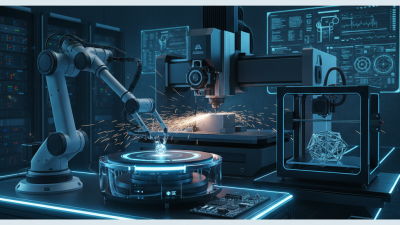
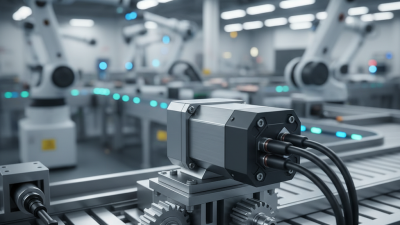
Stepper motor controllers play a vital role in various industrial applications. These devices precisely control the position and speed of stepper motors. In automation, they ensure accurate movements, reducing margin for error. From robotics to CNC machines, stepper motor controllers facilitate intricate tasks. They offer reliability, but not every application utilizes their full potential.
In the textile industry, for example, stepper motor controllers drive looms with precision. Each thread is positioned correctly for quality fabric production. Despite their effectiveness, some companies may overlook the need for proper calibration. This can lead to inconsistent results. Similarly, in 3D printing, these controllers allow for detailed layering. However, users often forget that maintenance is critical. Without regular checks, performance can decline, impacting the final product quality.
Another area is packaging machinery. Stepper motor controllers optimize the speed of conveyors. They improve efficiency, but if not programmed correctly, jams can occur. This slows down the entire production line. As industries continue to evolve, the importance of fine-tuning these controllers cannot be understated. Many professionals must rethink their approach to maximizing effectiveness. Ignoring this can lead to missed opportunities for innovation.
Applications of Stepper Motor Controllers in Industry


 Baijia Hao